
Windows That Seal Out Minnesota Winters
Window Installation & Replacement in Lake Crystal for drafts, failed seals, and energy loss in aging window frames
Theissen Construction handles window installation and replacement for homeowners in Lake Crystal dealing with visible frost buildup on interior glass, condensation trapped between panes, or frames that no longer close flush against their stops. These are the signs that a window has structurally failed—not just aged—and replacement is the correct course of action rather than recaulking or weatherstripping. Minnesota's freeze-thaw cycle accelerates frame deterioration faster than in moderate climates, making seal failure a predictable outcome for windows beyond their useful lifespan.
Window replacement in this region involves more than swapping glass units. The rough opening is inspected for water infiltration along the sill plate, which is a common failure point in homes that have experienced repeated ice dam cycles. Flashing integration, frame shimming to maintain plumb alignment, and proper insulation of the gap between the new frame and the framing cavity all affect long-term performance. Energy-efficient window improvements—including low-emissivity coatings and gas-filled insulating units—are selected based on the orientation of each window relative to prevailing wind and solar exposure, not applied uniformly across every opening.
Request a window assessment to identify which openings show signs of seal failure or frame movement before the next heating season.
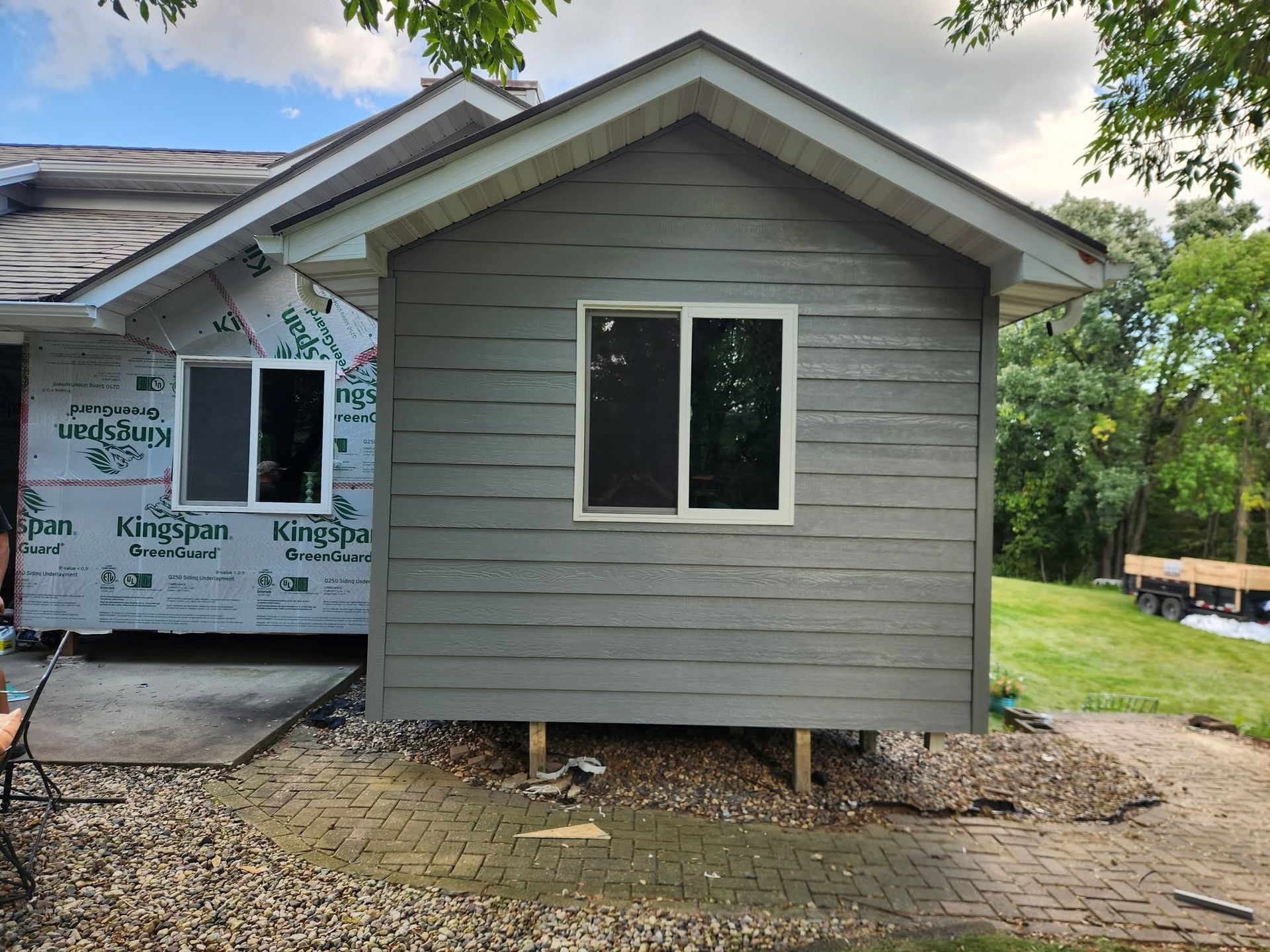
What Proper Window Replacement Requires
A correct installation begins with accurately measuring the rough opening rather than the existing frame, because older frames often shift over time and no longer reflect the original dimensions. The new window unit must be set level, plumb, and square before any fastening occurs—a window that is even slightly racked will develop operational problems and air infiltration at the corners regardless of how well the exterior trim is finished. Exterior window upgrades also require attention to the drainage plane, so water that contacts the exterior casing has a path away from the wall assembly rather than into it.
Once installation is complete, you will notice that interior surface temperatures along the glass improve noticeably during cold weather, which eliminates the convective drafts that make rooms feel colder than the thermostat reads. Operational sashes move smoothly, lock fully, and no longer require force to seat against the frame. Any condensation that previously appeared between glass panes—indicating a failed insulating unit—will be absent from properly installed replacement windows.
The scope of a window project depends on whether the installation is a full-frame replacement or a pocket insert into an existing frame. Full-frame replacements are appropriate when the existing frame shows rot, water damage, or significant air infiltration at the rough opening. Pocket inserts are a reasonable approach when the existing frame is structurally sound and dimensionally accurate. The condition of the framing cavity determines which method applies, and that decision is made during the assessment rather than assumed in advance.
Common Questions About Window Replacement
These questions come up regularly when homeowners in Lake Crystal are evaluating window replacement projects, particularly as they weigh timing, method, and what the installation actually involves.
What is the difference between a full-frame replacement and a pocket insert?
A full-frame replacement removes the existing frame down to the rough opening and installs a complete new unit, which allows inspection and repair of the framing cavity and sill. A pocket insert slides into the existing frame, which preserves interior and exterior trim but requires the existing frame to be structurally intact and dimensionally stable.
How does Minnesota's climate affect window selection?
Lake Crystal experiences sustained cold periods that require windows with low U-factor ratings to limit heat conduction through the glass unit. Triple-pane glass or double-pane units with argon fill and low-emissivity coatings are commonly specified for south- and west-facing openings that see both solar gain and wind exposure.
When is recaulking or weatherstripping a sufficient fix rather than full replacement?
Recaulking addresses surface-level air infiltration at the frame-to-wall interface. When condensation forms between the glass panes, when the frame itself has rotated or racked, or when the sill shows signs of water absorption, those conditions require replacement rather than surface sealing.
What should I look for to confirm a window was installed correctly?
After installation, operate each sash through its full range and verify it locks without forcing. Inspect the interior perimeter for gaps in the insulation fill and confirm that the exterior flashing laps correctly over the water-resistive barrier rather than being tucked behind it.
Why do costs vary significantly between window replacement estimates?
Unit cost differences reflect glass package specifications, frame material, and sash configuration. Installation cost differences reflect whether the rough opening requires repair work, how accessible the opening is from the exterior, and whether existing trim can be reused or needs replacement.
Theissen Construction works through each window opening systematically to confirm the installation method before any work begins. To schedule a review of your current windows and discuss which openings are candidates for replacement or upgrade, call (507) 508-6380.