
Exterior Renovations That Address Real Structural Conditions
Exterior Remodeling in Lake Crystal for homes with deteriorating siding, failing trim, compromised water management, or outdated exterior assemblies requiring full renovation
Complete exterior renovations require a different planning approach than single-component replacements because every exterior system—siding, trim, flashing, windows, doors, and soffit—interacts with the others as part of a single drainage and air barrier assembly. Theissen Construction manages exterior remodeling projects in Lake Crystal where multiple systems need to be addressed together rather than sequentially, ensuring that new components integrate correctly rather than creating gaps or mismatches at the transitions between trades.
Exterior upgrades in this region require attention to how Minnesota's freeze-thaw cycle affects wall assemblies. Ice dam conditions, which develop when heat escapes through the roof and melts snow that then refreezes at the eave, can force water behind fascia and soffit assemblies that were not originally detailed for that exposure. Similarly, siding installed without a proper drainage plane—a gap or mat between the back face of the siding and the water-resistive barrier—will trap moisture against the sheathing, which accelerates rot in the structural framing behind it. Home exterior improvements that address only the visible surface without correcting underlying drainage plane deficiencies extend the visible appearance without solving the structural problem.
Schedule a consultation to review your home's current exterior condition and identify which systems are candidates for renovation versus surface repair.
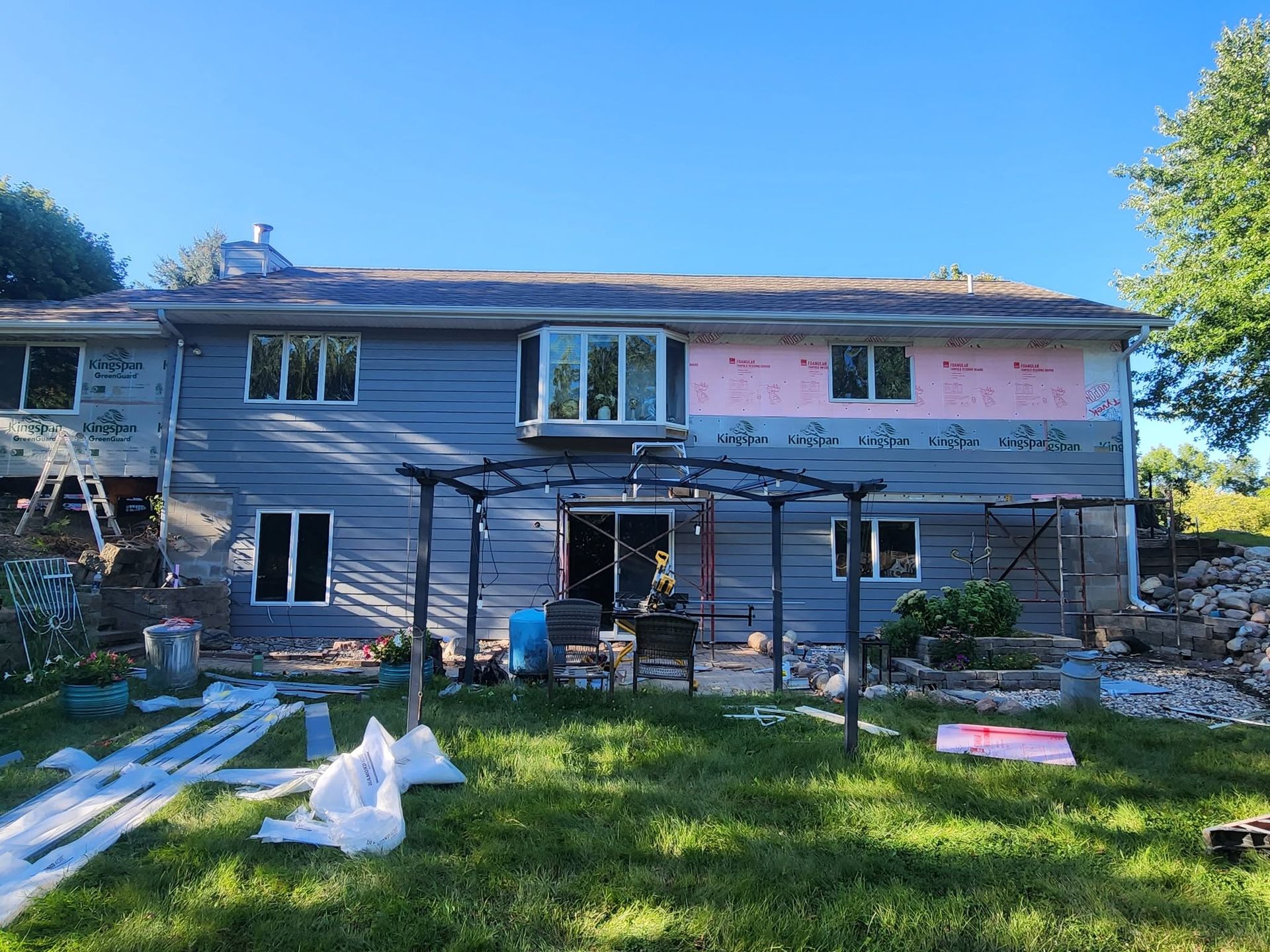
What a Complete Exterior Renovation Actually Accomplishes
A full exterior remodeling project typically begins with an assessment of the existing wall assembly, which involves inspecting flashings at windows, doors, and penetrations for correct lapping and integration with the water-resistive barrier. Remodeling projects that skip this step often install new siding over existing failure points, which means water infiltration continues behind the new material and the problem resurfaces within a few years. The sequence of installation matters: water-resistive barriers are applied before window and door flanges are set, and flashing laps over those flanges before siding is fastened.
After a complete exterior renovation, the most immediate observable change is the elimination of visible deterioration—peeling paint, soft or cupped siding boards, gap-filled trim joints, and stained fascia. Less visible but equally important, the wall assembly will no longer show interior moisture indicators like staining at window corners or soft drywall at sill locations, which were symptoms of exterior water infiltration rather than interior condensation. Theissen Construction documents the condition of the existing assembly during demo so that any framing repairs are addressed before new cladding is applied.
Exterior remodeling scope ranges from full cladding replacement to selective renovation of the components most responsible for water management failures. The decision about how much to remove versus retain depends on the condition of the sheathing, the current flashing details, and whether the existing drainage plane is adequate for the new cladding system being installed. Homes built before drainage plane requirements were standard in building codes frequently require more complete renovation than their exterior appearance suggests.
Questions Before Starting Your Exterior Project
Exterior remodeling projects in Lake Crystal raise consistent questions about scope, sequencing, and what the renovation actually addresses beneath the surface. These answers reflect how the work is actually planned and executed.
Why does exterior remodeling cost more than simple siding replacement?
Complete exterior renovations include assessment and repair of underlying components—sheathing, water-resistive barrier, and flashing—that siding-only contracts typically exclude. Addressing those components during the project prevents recurring failures that surface shortly after a surface-only replacement is finished.
How do I know whether my existing sheathing needs replacement or can be retained?
During demo, sheathing is inspected for soft spots, delamination, and staining that indicates sustained moisture exposure. Sheathing that has lost structural integrity cannot hold fasteners for the new cladding system and must be replaced rather than recovered.
What role does flashing play in exterior remodeling, and why does it matter for Lake Crystal homes?
Flashing at windows, doors, and roof-to-wall intersections creates the water-shedding path that keeps bulk water from entering the wall cavity. In a climate with significant snowmelt and ice dam exposure, correct flashing integration is the single most important factor in preventing water infiltration behind the new exterior system.
When should exterior remodeling be scheduled around the weather?
Exterior cladding installation requires dry conditions for water-resistive barrier application and adhesive-based flashings. Late spring through early fall provides the most reliable installation window, though portions of the work can be sequenced around weather interruptions.
What is the difference between an exterior upgrade and a complete exterior renovation?
An exterior upgrade typically addresses visible components—siding, paint, trim—without removing and replacing the underlying drainage plane. A complete renovation removes cladding down to the sheathing, corrects the water management assembly, and reinstalls all exterior systems in the correct sequence.
Theissen Construction approaches exterior remodeling as a systems project rather than a surface replacement, which means the scope is determined by what the wall assembly actually requires rather than by what is visible from the street. To discuss your home's exterior condition and review renovation options, call (507) 508-6380.