
Exterior Walls That Manage Weather and Moisture
Siding Installation & Replacement in Lake Crystal for homes with failing, damaged, or outdated exterior cladding that compromises weather resistance
Cracked, warped, or deteriorating siding doesn't fail all at once—it admits moisture gradually at seams, around penetrations, and at corners where caulk has dried and shrunk, eventually allowing water to reach the sheathing and wall cavity before any interior symptoms appear. Theissen Construction handles siding installation and replacement in Lake Crystal for homes where the exterior cladding has reached the point where repair no longer addresses the underlying performance gap. Homeowners typically recognize the need when paint is peeling from the inside of exterior walls, energy bills reflect drafts, or siding boards show visible buckling, rot, or impact damage.
The installation process involves removing existing siding completely in most replacement projects, inspecting the sheathing layer for moisture damage or deterioration, and addressing any problem areas before new cladding goes on. House wrap or vapor barrier installation follows, then the new siding is applied according to the manufacturer's nailing pattern and overlap specifications—both of which affect wind resistance and warranty compliance. Minnesota's temperature swings from deep cold to summer heat create significant expansion and contraction cycles in cladding materials, which is why fastening method and material selection matter more here than in moderate climates.
Schedule an exterior assessment to evaluate the current condition of your siding and identify what the replacement project would involve at the sheathing level.
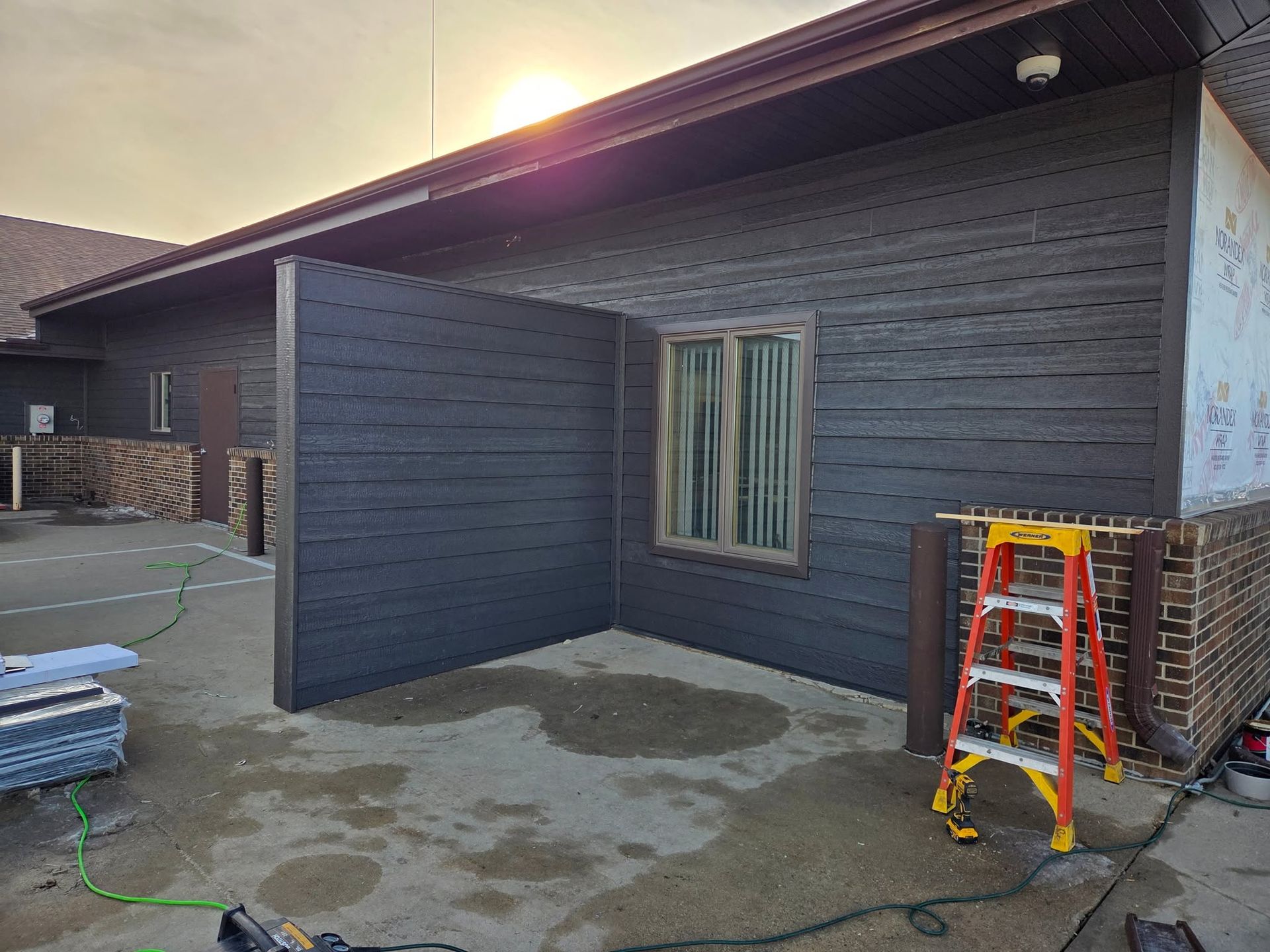
What You Notice Once New Siding Is Finished
Siding replacement begins with a methodical removal sequence that preserves the condition of window and door trim where possible, though trim is often replaced as part of the project when it shows moisture damage or paint adhesion failure. The sheathing inspection during this phase is one of the most informative parts of the project—it reveals how far moisture has migrated behind the old siding and whether any structural framing needs attention before the new cladding goes on. Flashing at windows, doors, and roof-to-wall transitions is reinstalled or replaced to ensure the new siding system performs as a complete weather barrier rather than just a new surface layer.
After installation, the exterior will show tight, consistent seams at all joints and corners, no visible fastener heads in the field of the siding panels, and clean transitions at windows and trim that don't show gaps or irregular caulk lines. Inside the home, drafts along exterior walls typically diminish noticeably once the air sealing at the sheathing layer has been addressed during the replacement process. The exterior color and profile remain consistent across the entire facade rather than showing patched or mismatched sections that indicate previous spot repairs.
Theissen Construction works with multiple siding products, and the right choice for a given home depends on the existing wall assembly, the profile and style of the home's architecture, and what maintenance level the homeowner wants over the long term. Fiber cement, vinyl, and engineered wood each respond differently to Minnesota's climate, and each has different requirements for the installation details that determine how long the material performs before issues develop at seams or fasteners.
What Homeowners Usually Ask About Siding
These questions reflect the practical concerns that come up most often when Lake Crystal homeowners are evaluating siding replacement and trying to understand what the project actually involves.
How do I know if the sheathing needs replacement before new siding goes on?
Soft spots when pressed from the exterior, visible discoloration at the sheathing surface, or any areas where the old siding shows sustained staining are indicators that moisture has reached the substrate and needs to be evaluated before new material is installed.
What siding material holds up best in Minnesota's freeze-thaw climate?
Fiber cement is highly resistant to moisture absorption and doesn't expand and contract as dramatically as vinyl in extreme temperatures, though vinyl installed with proper fastening gaps performs well in this climate when installed correctly.
Why does the house wrap layer matter underneath siding?
The house wrap functions as a secondary drainage plane, meaning any water that gets behind the siding—at fastener points, seams, or cut edges—has a path to drain out rather than saturating the sheathing.
When is siding repair a reasonable option versus full replacement?
Spot repair works when damage is isolated to a small area and the surrounding material is structurally sound and has consistent color—once siding shows widespread adhesion failure, cracking, or moisture infiltration across multiple elevations, repair adds cost without solving the systemic performance problem.
How long does a full siding replacement typically take for an average-sized home?
The duration depends on the size of the home, the number of penetrations and architectural details that require custom cutting, and what's found at the sheathing layer once the old material comes off.
Theissen Construction can provide a detailed look at your current exterior, identify what's happening at the wall assembly level, and outline what a replacement project would involve from removal through final trim work—call (507) 508-6380 to set up an evaluation.