
Renovations That Fix What Surface Work Misses
Exterior Home Renovations in Lake Crystal for properties requiring combined structural updates, water management corrections, and appearance improvements across multiple exterior systems
Staining at window corners, soft fascia boards, paint that fails within a year of application, and siding that cups or buckles away from the wall are all symptoms of the same underlying condition: water is moving through the exterior assembly in ways the original construction did not anticipate or prevent. Theissen Construction addresses exterior home renovations in Lake Crystal where these combined failure patterns require coordinated work across siding, trim, flashing, and structural components—not sequential single-trade replacements that leave adjacent failure points unaddressed.
Combined exterior improvements are more complex to plan than single-system replacements because the scope of each component affects the others. Replacing siding without correcting failed window flashing means the new cladding will trap water at the same locations the old cladding did. Addressing structural exterior updates—like repairing or replacing deteriorated sheathing panels—requires removing the cladding above and reinstalling it correctly after the repair is complete. When multiple systems are failing simultaneously, the most efficient and durable approach is to sequence the work so that the underlying water management assembly is corrected first, then the visible exterior components are installed over a properly functioning drainage plane.
Set up a project review to evaluate which exterior systems on your home are failing structurally versus which are showing cosmetic wear that can be addressed with targeted repairs.
Why Coordinated Exterior Work Outperforms Piecemeal Repairs
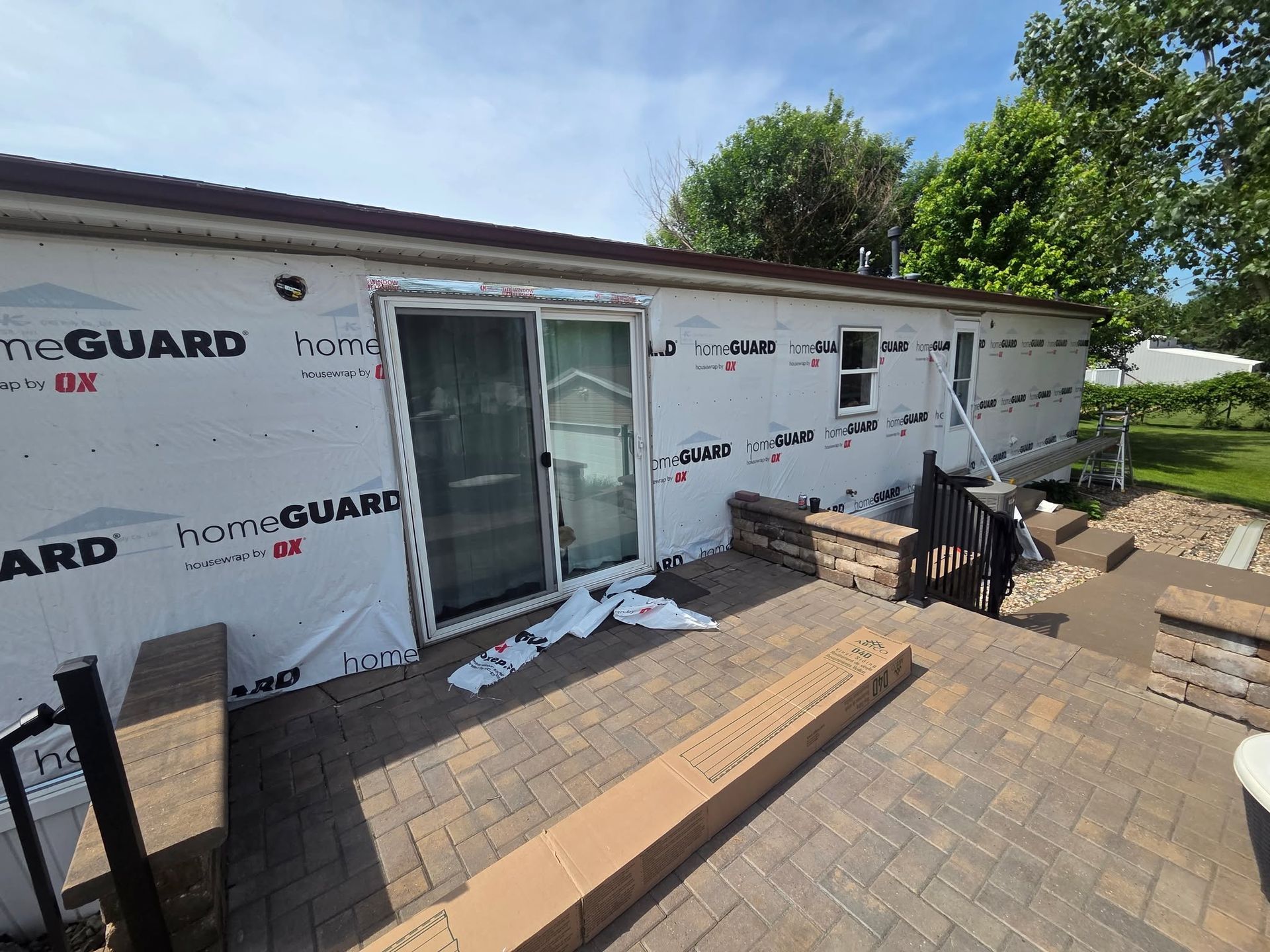
Remodeling and renovation projects that coordinate multiple exterior systems follow a specific installation sequence: structural repairs first, then water-resistive barriers, then window and door unit installation, then cladding, then trim and paint. Skipping steps or reversing this sequence creates joints and transitions where water can enter the assembly but cannot exit. Theissen Construction manages the full sequence on combined exterior renovation projects rather than subcontracting individual components to separate crews working without coordination, which is the condition that most commonly produces mismatched flashing details and incomplete weatherproofing at system transitions.
After a complete exterior home renovation, the observable changes extend beyond appearance. Interior wall surfaces adjacent to previously failing exterior components will no longer show seasonal staining or soft drywall that indicated ongoing water infiltration. The exterior cladding will sit flat against the wall plane without gaps at butt joints or waves in the field, because the sheathing beneath it was confirmed level and sound before installation. Home appearance upgrades—new trim profiles, updated siding profiles, improved window and door surrounds—are visible immediately, while the corrected water management assembly behind them is what determines how long those visible improvements last.
The scope of an exterior home renovation is not fixed at the estimate stage because the condition of concealed components—sheathing, framing at window and door openings, rim joist areas at the foundation—is confirmed during demo rather than assumed from the exterior. Projects are scoped with this contingency in mind so that structural repairs discovered during the work are addressed within the existing project rather than deferred. Homes in Lake Crystal that have experienced repeated ice dam cycles over many winters frequently show more sheathing and framing deterioration than their exterior surfaces suggest, particularly at the eave line and at north-facing walls that retain moisture longer through the season.
What Property Owners Usually Ask About Exterior Renovations
Combined exterior renovation projects generate more planning questions than single-system replacements because the scope involves decisions across multiple components. These answers address the most common questions about how the work is sequenced and what the renovation actually corrects.
How do I know whether my home needs a combined exterior renovation or targeted single-system repairs?
Targeted repairs are appropriate when failure is isolated to one component—a single window with a failed seal, a section of trim showing rot—and the surrounding assembly is in sound condition. Combined renovation is warranted when multiple systems show failure simultaneously, particularly when interior moisture symptoms suggest the water management assembly has failed rather than a single surface component.
What does a structural exterior update involve compared to a cosmetic improvement?
Structural updates address components that carry load or manage water—sheathing, framing at openings, flashing, and drainage plane continuity. Cosmetic improvements address visible surfaces—paint, trim profiles, siding color or texture. Durable exterior renovations address structural conditions first and cosmetic improvements second.
Why does the installation sequence matter for exterior renovation projects?
Each layer of the exterior assembly is designed to shed water to the layer below it and ultimately to the drainage plane, which directs water out at the base of the wall. When components are installed out of sequence, the lapping relationship is reversed, and water that contacts the outer surface has a path into the wall rather than away from it.
How do Lake Crystal winters specifically affect the longevity of exterior renovations?
Freeze-thaw cycling causes dimensional movement in all exterior materials, which stresses joints and sealants repeatedly through each winter season. Exterior assemblies that were not detailed for that movement—particularly at window and door perimeters—develop gaps that allow water infiltration over time, which is why correct flashing and joint design matters more in this climate than in stable-temperature regions.
What should I ask a contractor before agreeing to an exterior renovation scope?
Ask specifically how the contractor handles concealed damage discovered during demo, what the water management sequencing looks like at window and door transitions, and whether the drainage plane behind the new cladding will be continuous or interrupted at existing penetrations. Clear answers to those questions distinguish contractors who understand the assembly from those who are replacing surfaces only.
Theissen Construction plans exterior home renovations around what the wall assembly actually requires, not what is visible from the curb. To discuss your home's exterior condition and identify where structural corrections are needed alongside cosmetic improvements, call (507) 508-6380.